AI Craft
Creative Autonomy
A cinematographer turned AIGC creator. What I learned on set wasn't how to operate a camera. It was how to see. Now I see the light inside a prompt.
Style Directions
All visuals below are AI-generated, crafted through prompt engineering, iterative curation, and post-processing by me.
Cyberpunk & Neon Noir
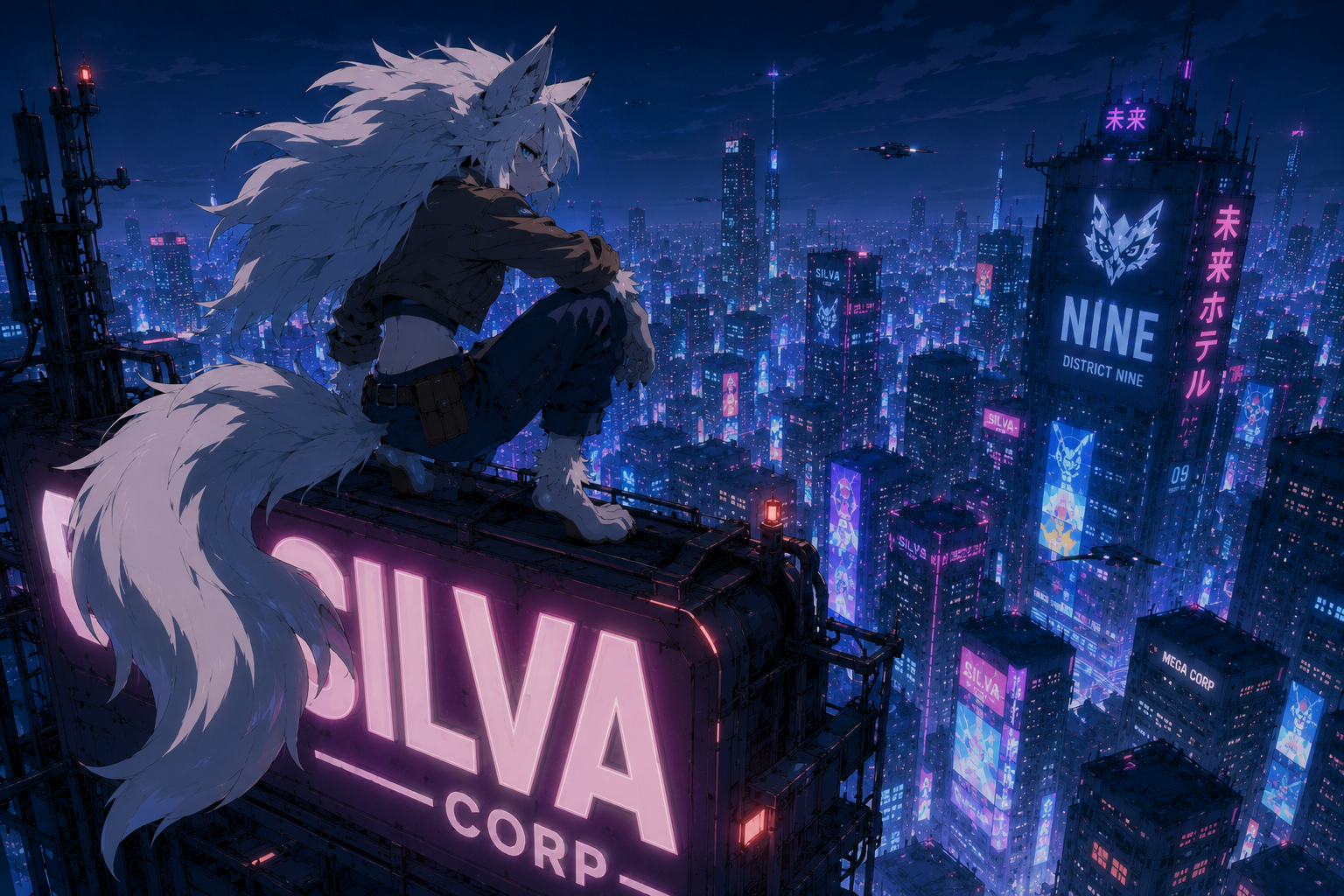
Neon Abyss
World-building concept for Night Cat Chase. Cinematographer-level prompt control: focal length, lighting ratios, urban depth. Cyberpunk isn't about stacking neon — it's about light hierarchy.
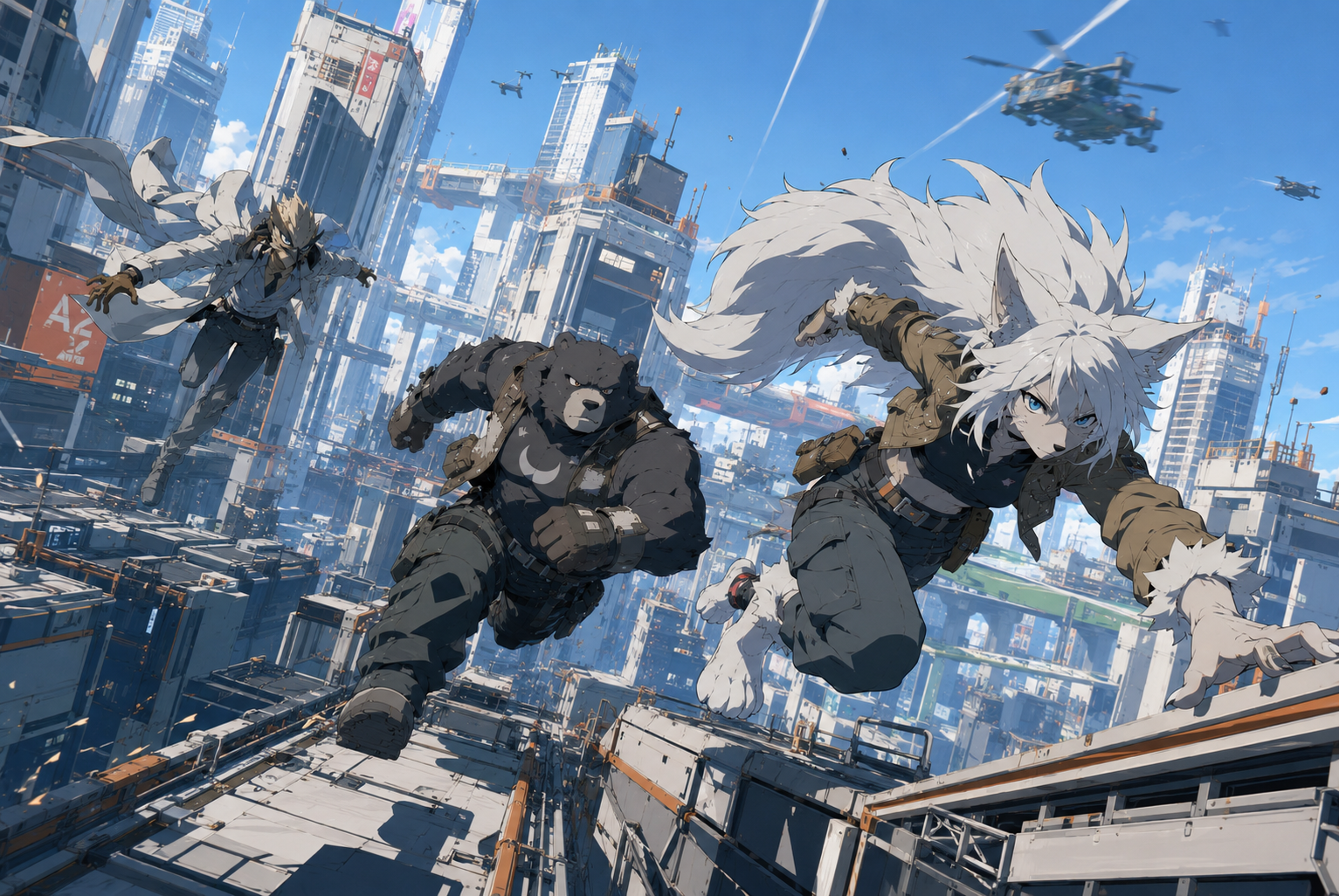
The Chase
High-speed pursuit scene. The hardest AI challenge: character consistency in motion — same character, same costume, same light. This frame went through 40+ prompt iterations.
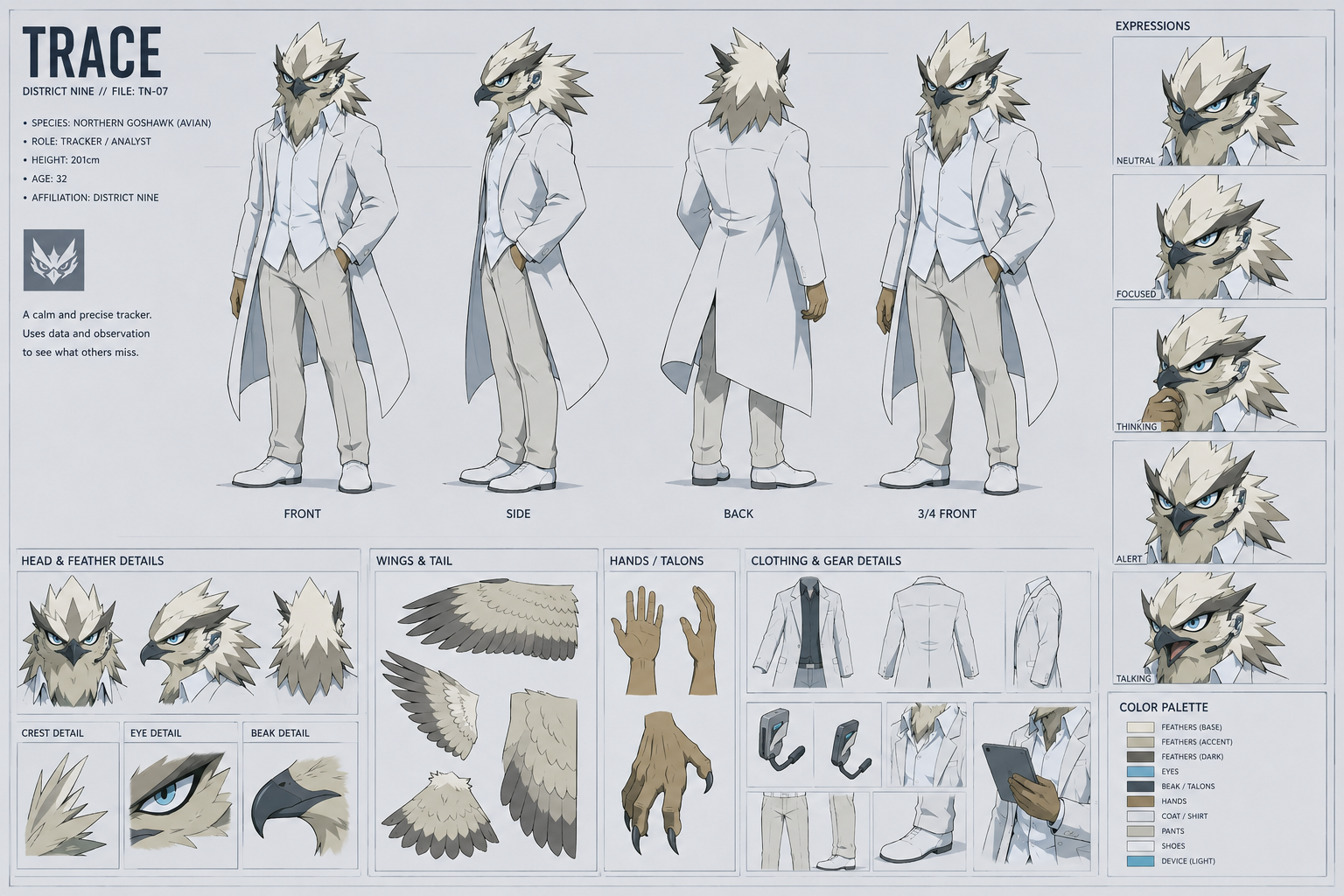
Trace Design Sheet
Multi-angle character design. Anchoring descriptors across prompts to ensure the same face across three views. Consistency isn't magic — it's engineering.
Myth & Dark Fantasy
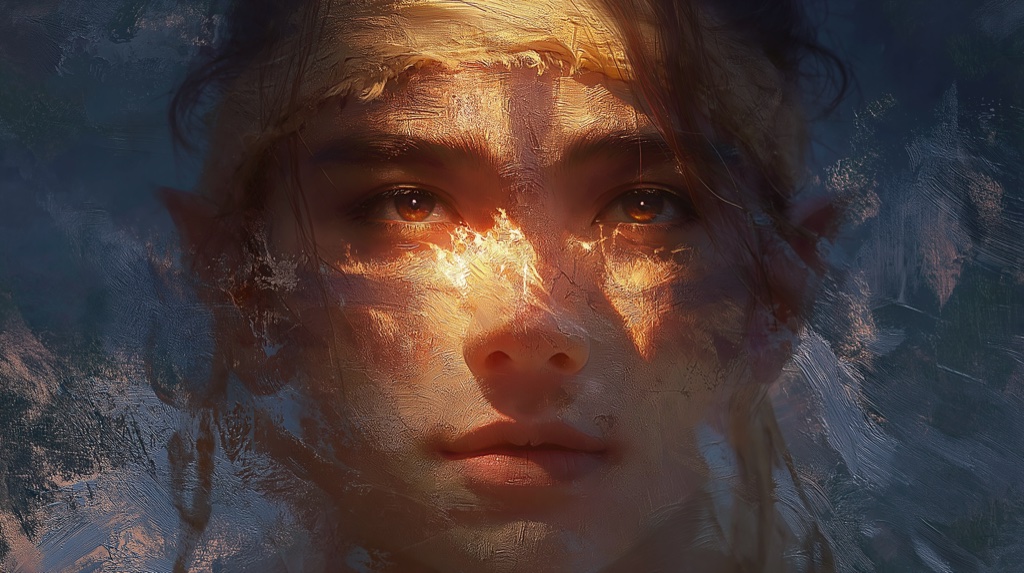
Dahuang: Ember
Portrait from the Dahuang series. Lava-like flowing light, a visual reinterpretation of ancient Chinese mythology. Bronze-age textures and oracle-bone motifs embedded in prompts — 'ancient' isn't a filter, it's material.
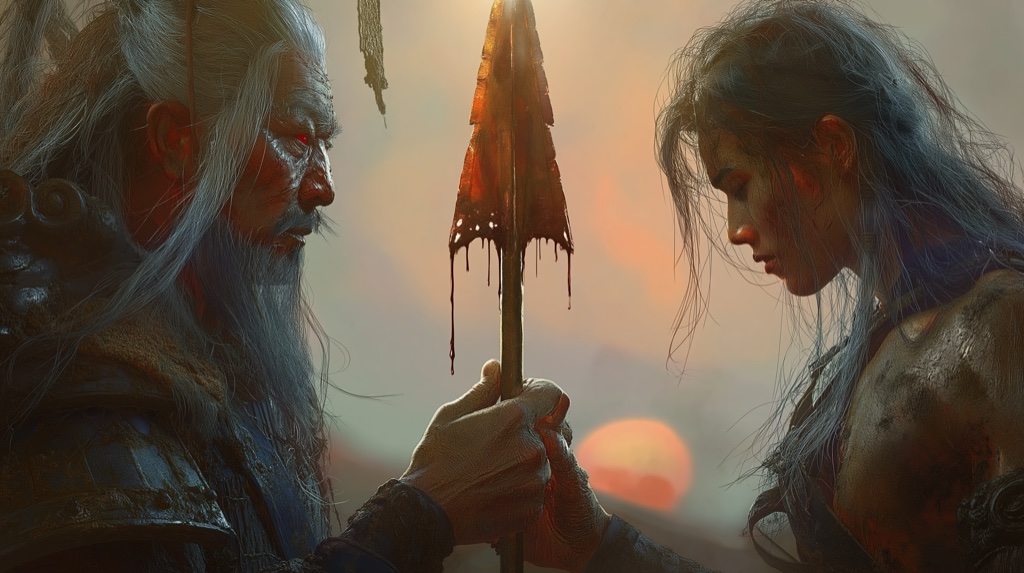
Dahuang: Odyssey
An epic frame from the Dahuang series. AI's capacity for dark realism is staggering — but controlling multi-character narrative relationships and eye-lines requires layered ControlNet and regional prompting.
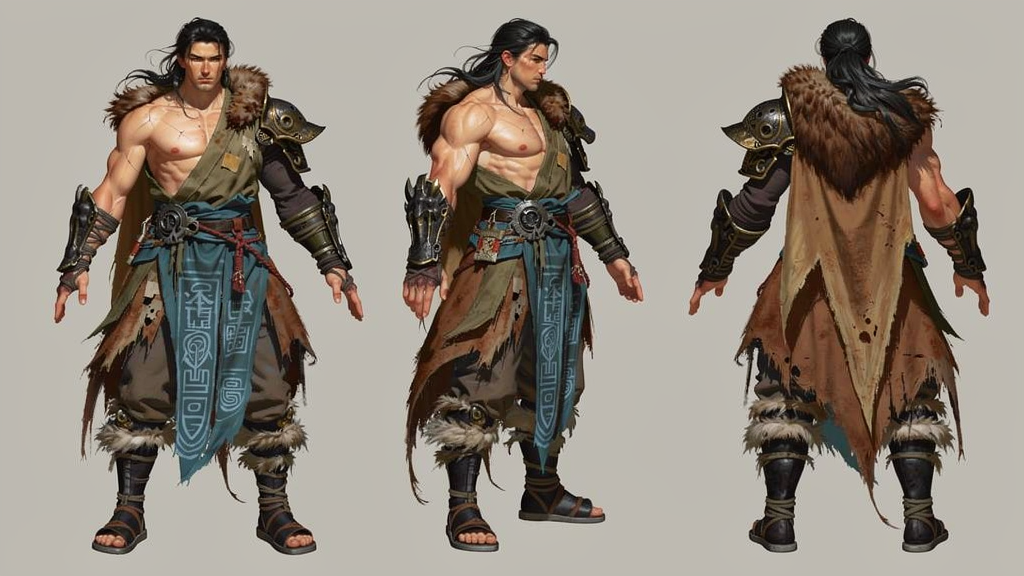
Houyi Design Sheet
Character sheet for the Houyi project. LoRA-trained facial anchors maintain consistency across multiple prompts. From muscle definition to fabric wear — every detail is written into the prompt, not guessed by AI.
Sci-Fi & Wasteland & Mecha
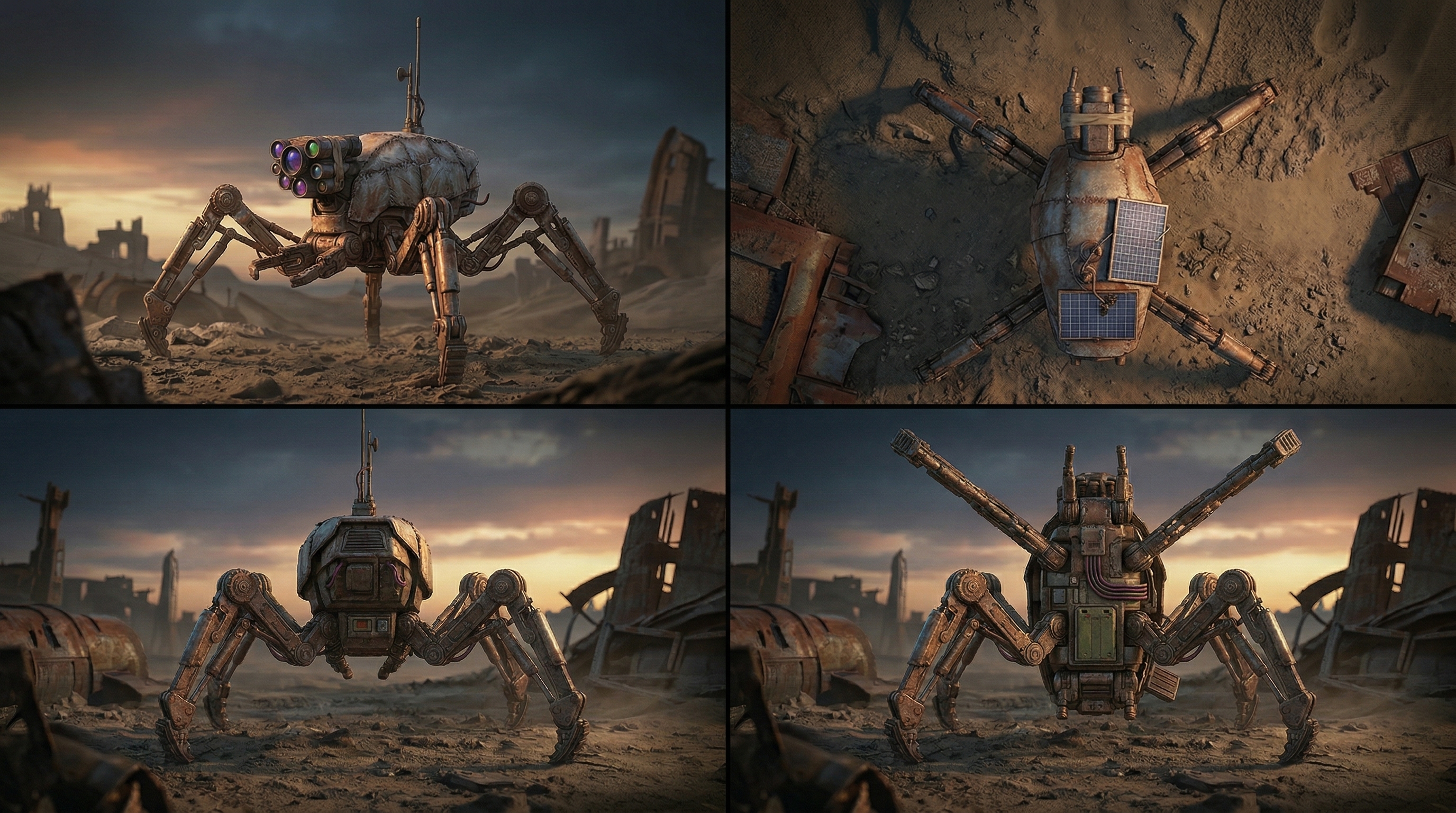
Crimson Forge
Wasteland mecha concept from Crimson Awakening. A breakthrough in multi-view consistency — the same mecha across three angles from separate prompts, kept structurally coherent through precise design anchors.
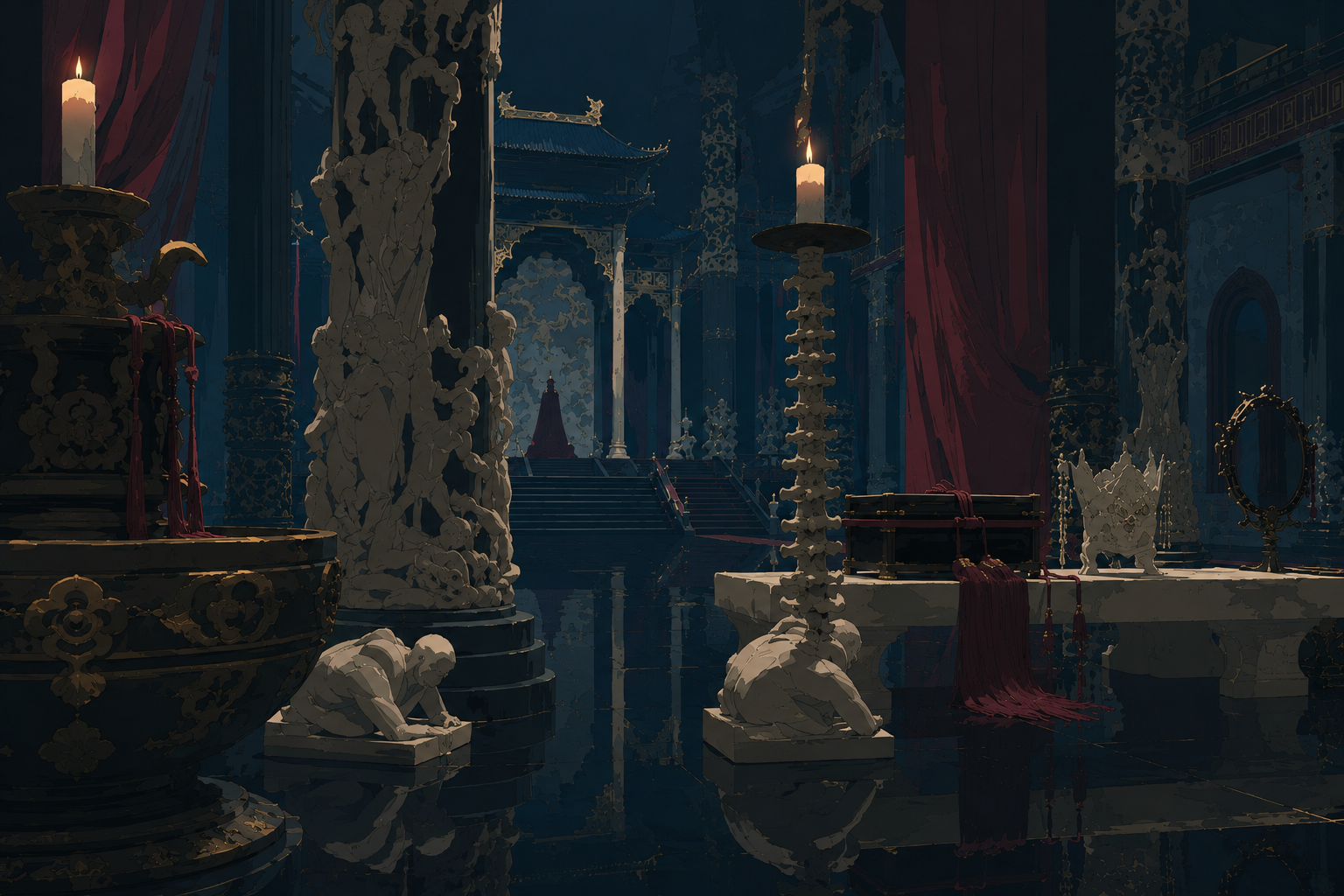
Bone Hall
Atmospheric concept in dark wuxia style. Symmetrical composition, skeletal detail, candlelit depth — AI excels at high-contrast material rendering, but needs precise light-source prompts to guide the warm/cool color interplay.
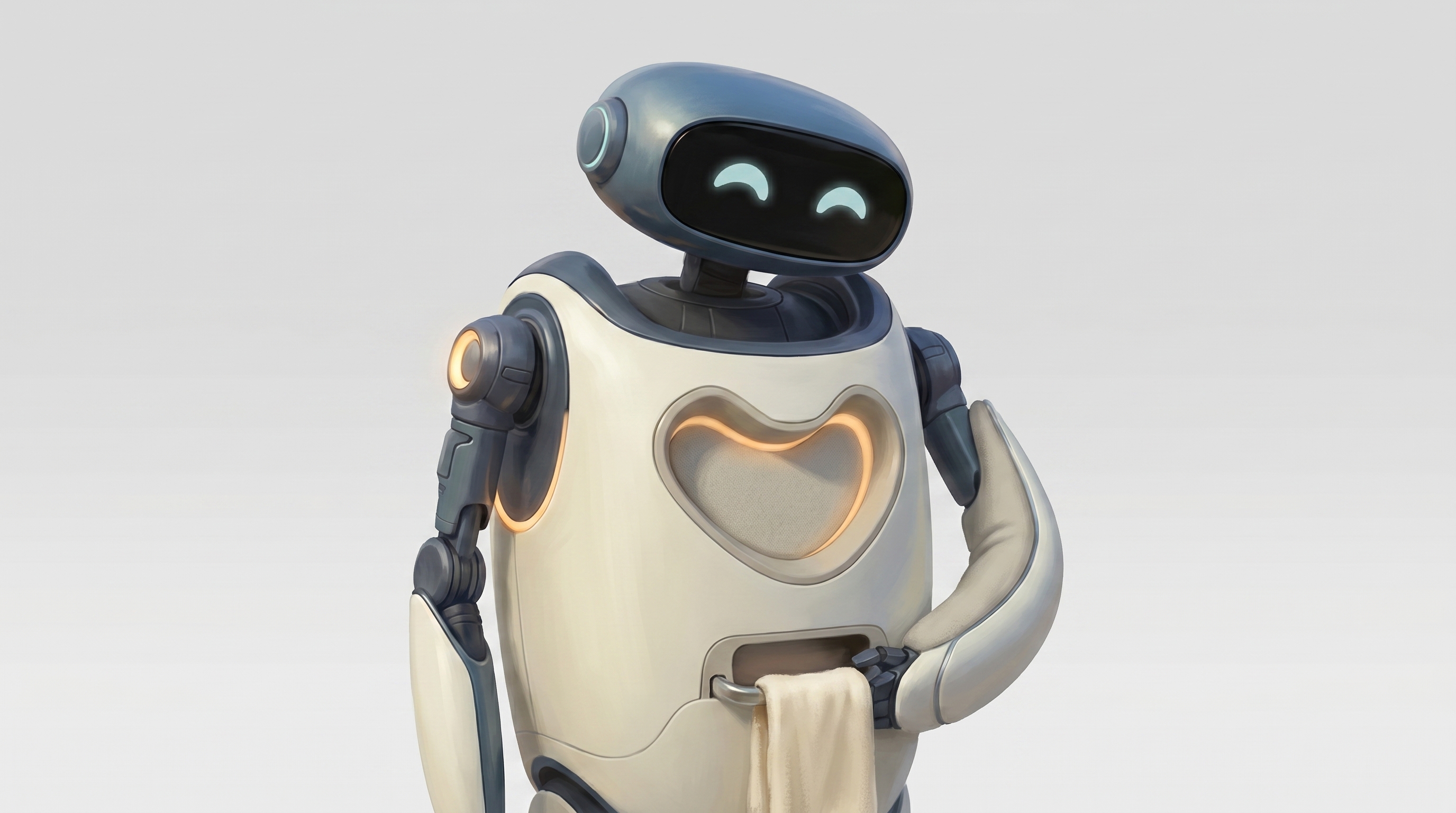
Companion Bot
From wasteland mecha to warm companion robots — stylistic range is itself a capability. Same AI tools, completely different visual languages. The key is the direction you give it, not the output it gives you.
Character & World
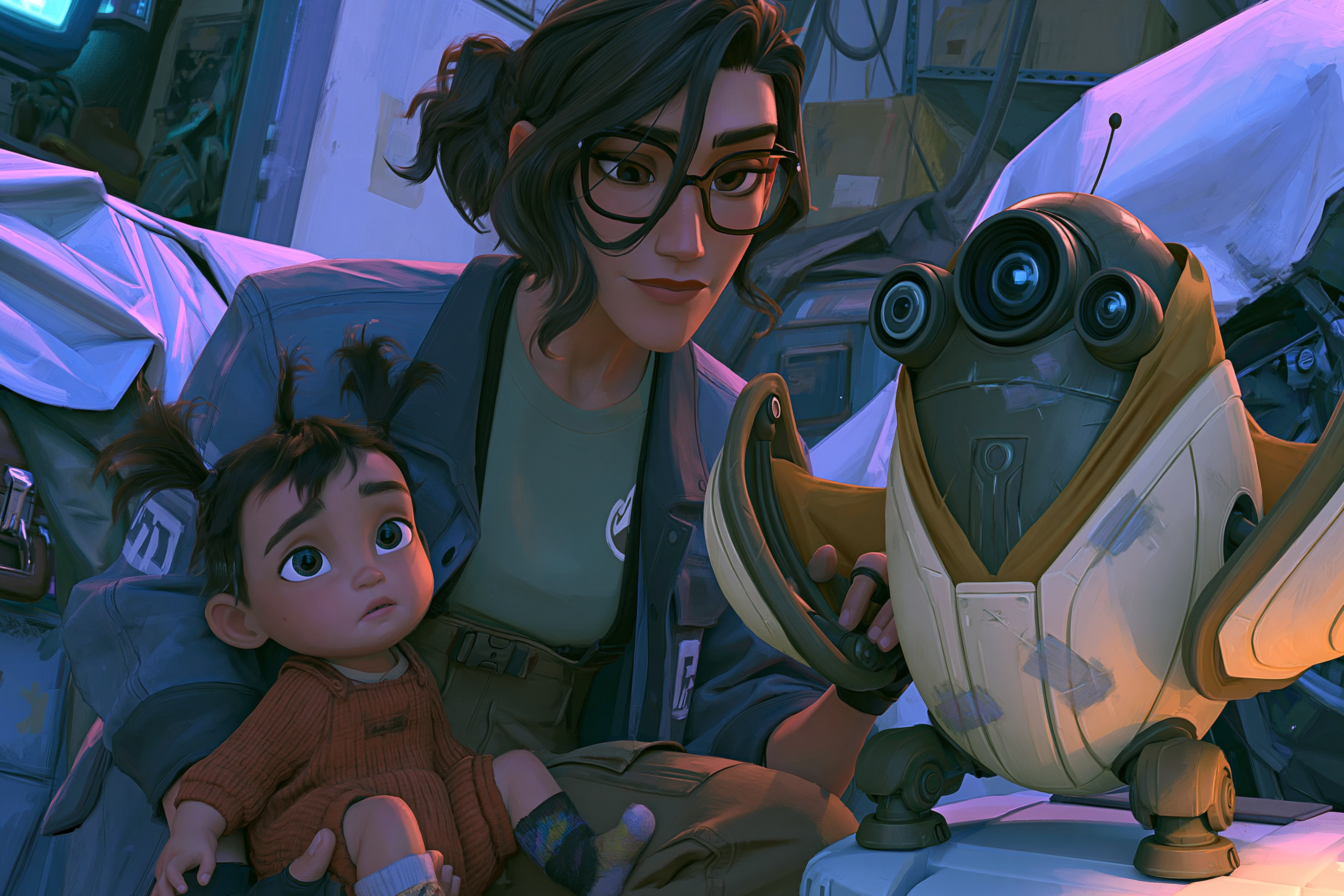
Family Portrait
Pixar-esque character design. AI can simulate any style — 2.5D animation, photorealistic rendering, cyberpunk illustration — but it won't choose which style to use. Choosing is the creator's job.
AI Character Design
Character concept design is where AI best amplifies the creator's intent. From mecha to titans, from wuxia to cyberpunk — these are character design outputs across projects, where every line, armor plate, and light path is precisely controlled in prompts.
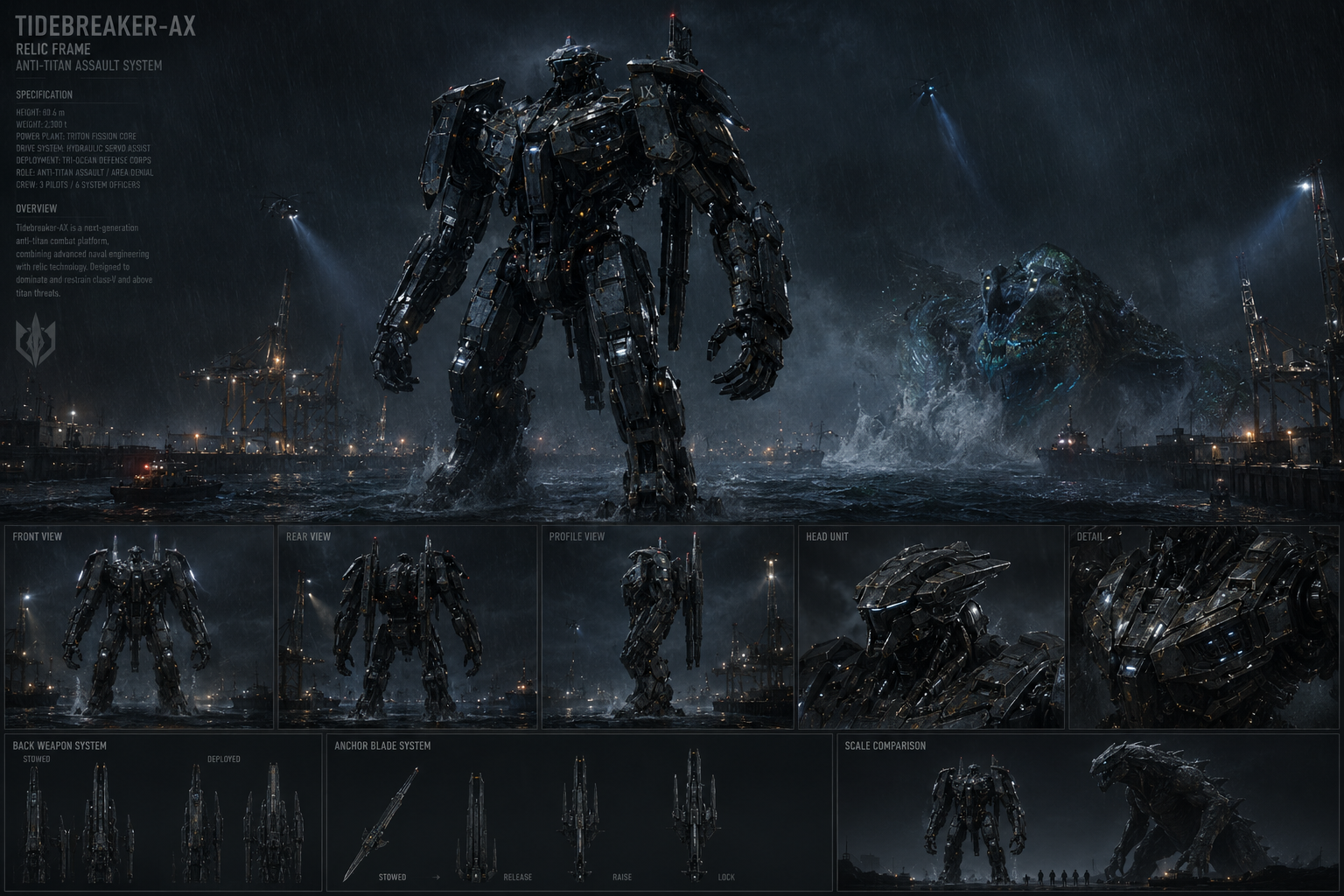
Legion: Cinematic Grade
Cinematic-grade mecha render with layered material passes — metal scratches, oil stains, oxidation — making AI-generated mecha look like it walked off a film set.
Legion: Orthographics
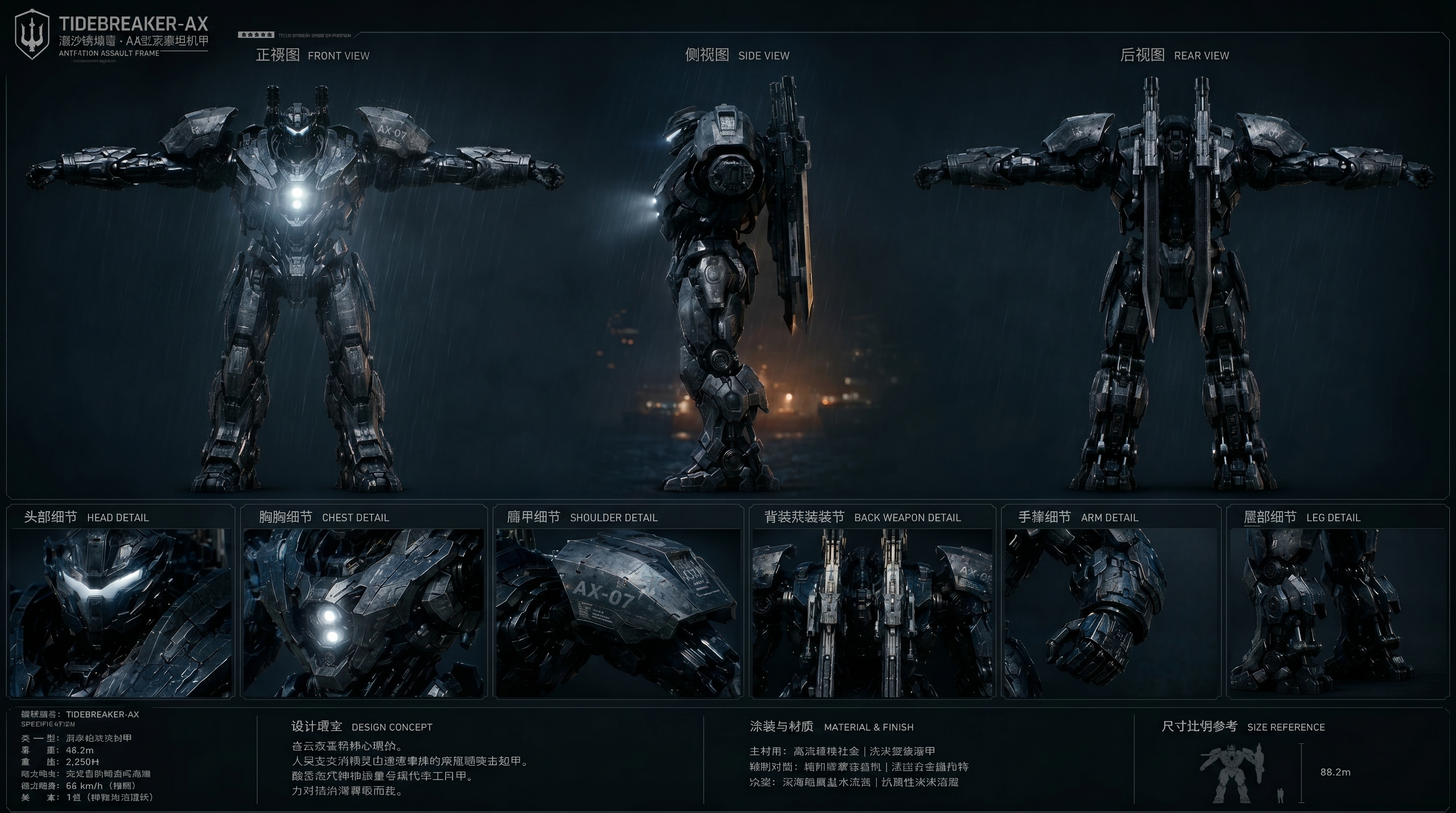
Multi-view mecha orthographics. Front/side/rear maintaining structural logic across angles — joint articulation, armor segmentation, power conduits — not random AI assembly. Design.
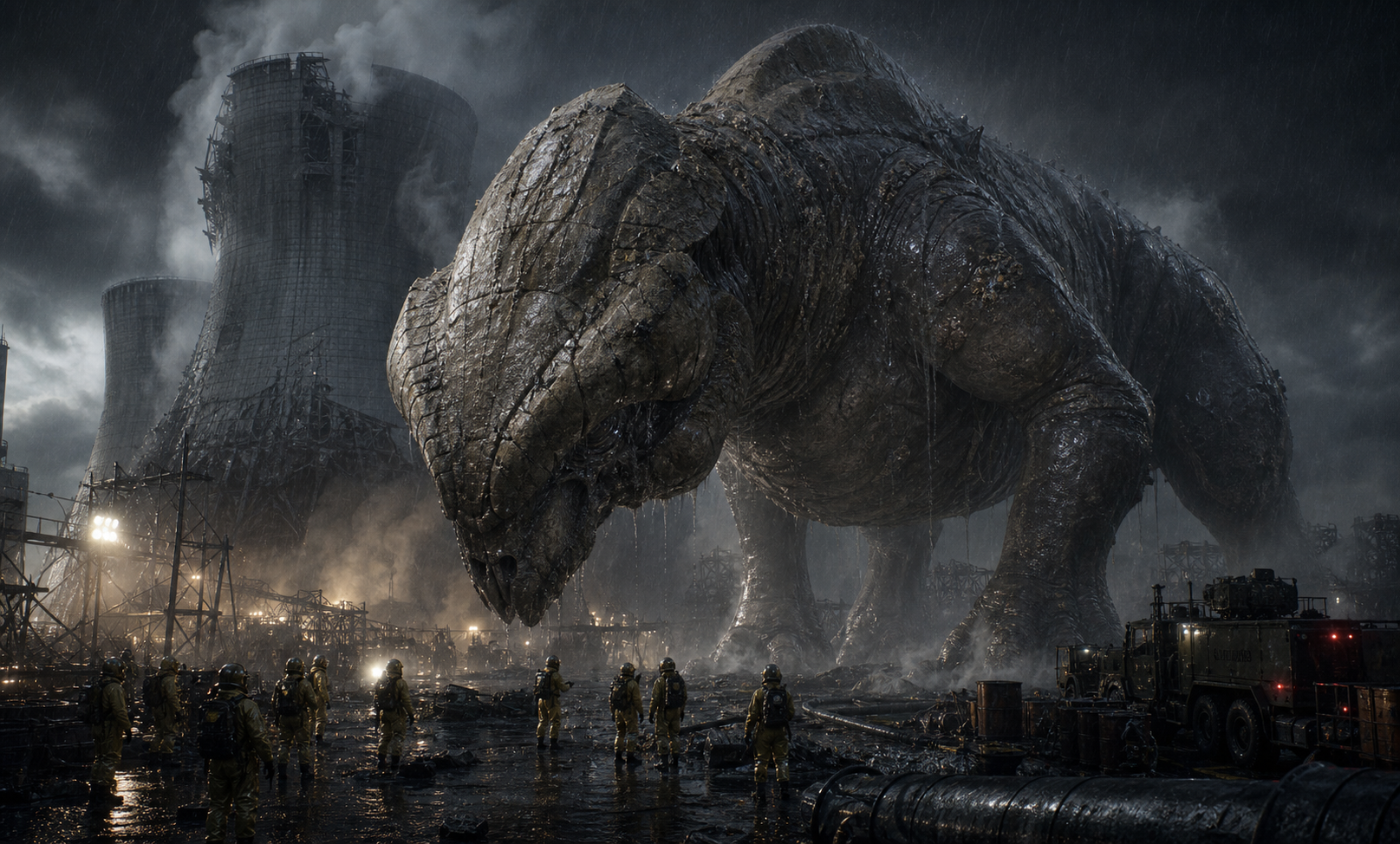
Titan: Abyssal
Titan-class creature concept from the Codex film project. Bone density, skin texture, ambient light ratios — making a monster feel like a biological reality, not a VFX asset.
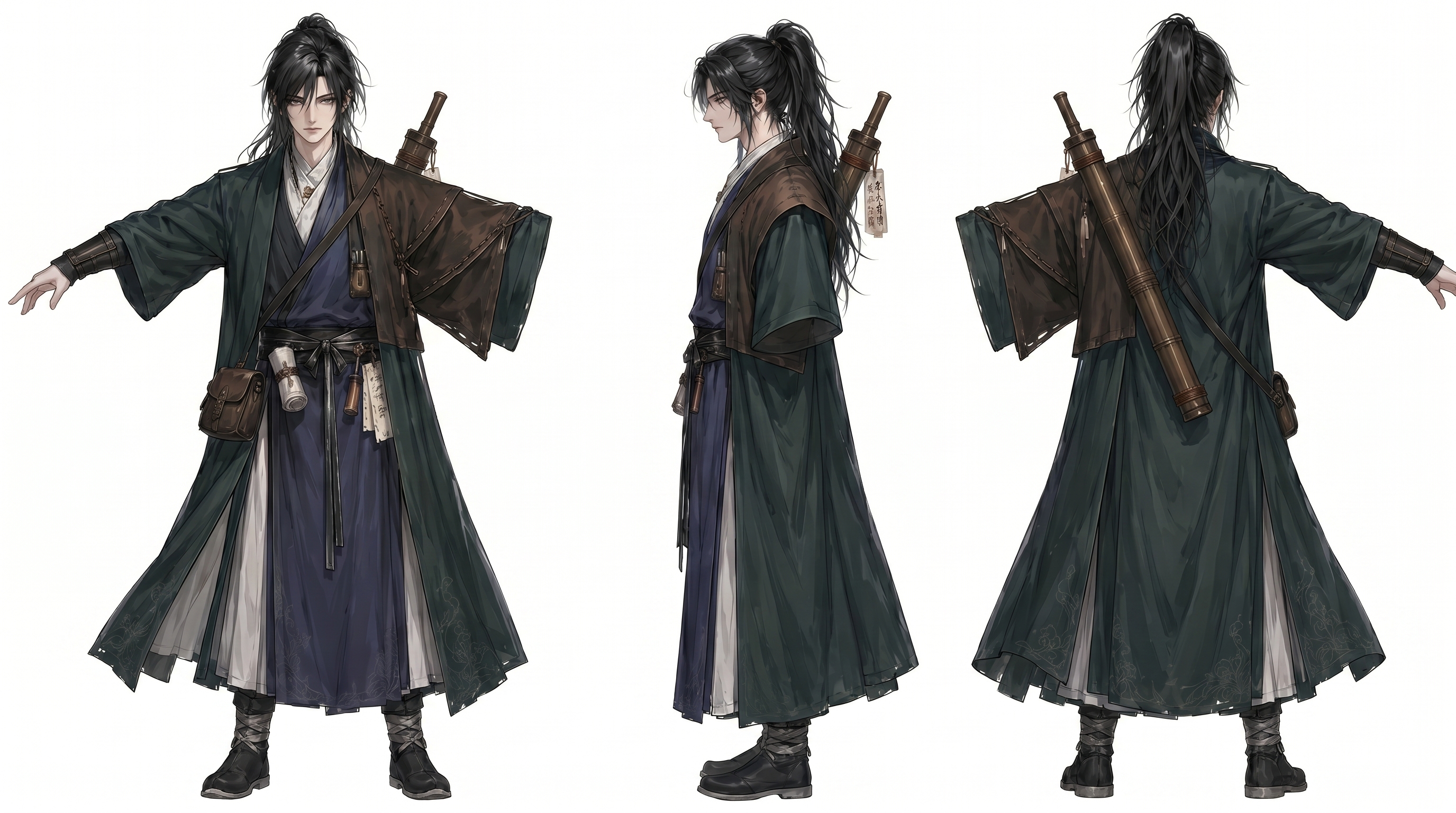
Shadow Grove: Turnaround
Character turnaround in wuxia AI style. Style refinement without altering core features — preserving 70% of original details, face, hair, costume structure. Style transfer, not redrawing.
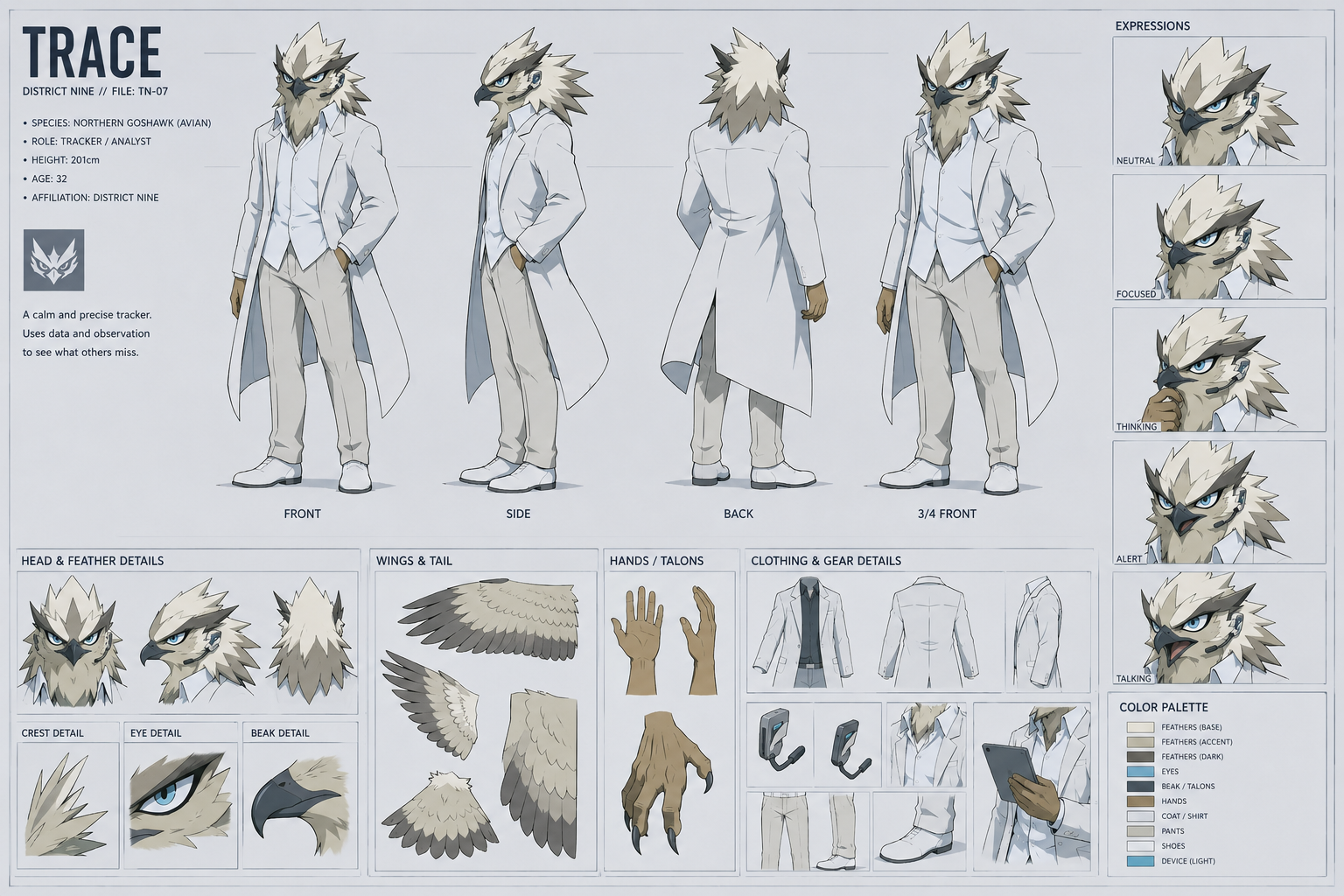
Trace: Full Brief
Complete design brief for Trace from Night Cat Chase — expression sheets to action poses, same character identity locked across multiple prompts. Character consistency is the first gate of AI-assisted character design.
Below is the complete AI-assisted character concept pipeline document — from facial reference to half-body, three-view, detail refinement, to final scene. Not one-click. Iterative.
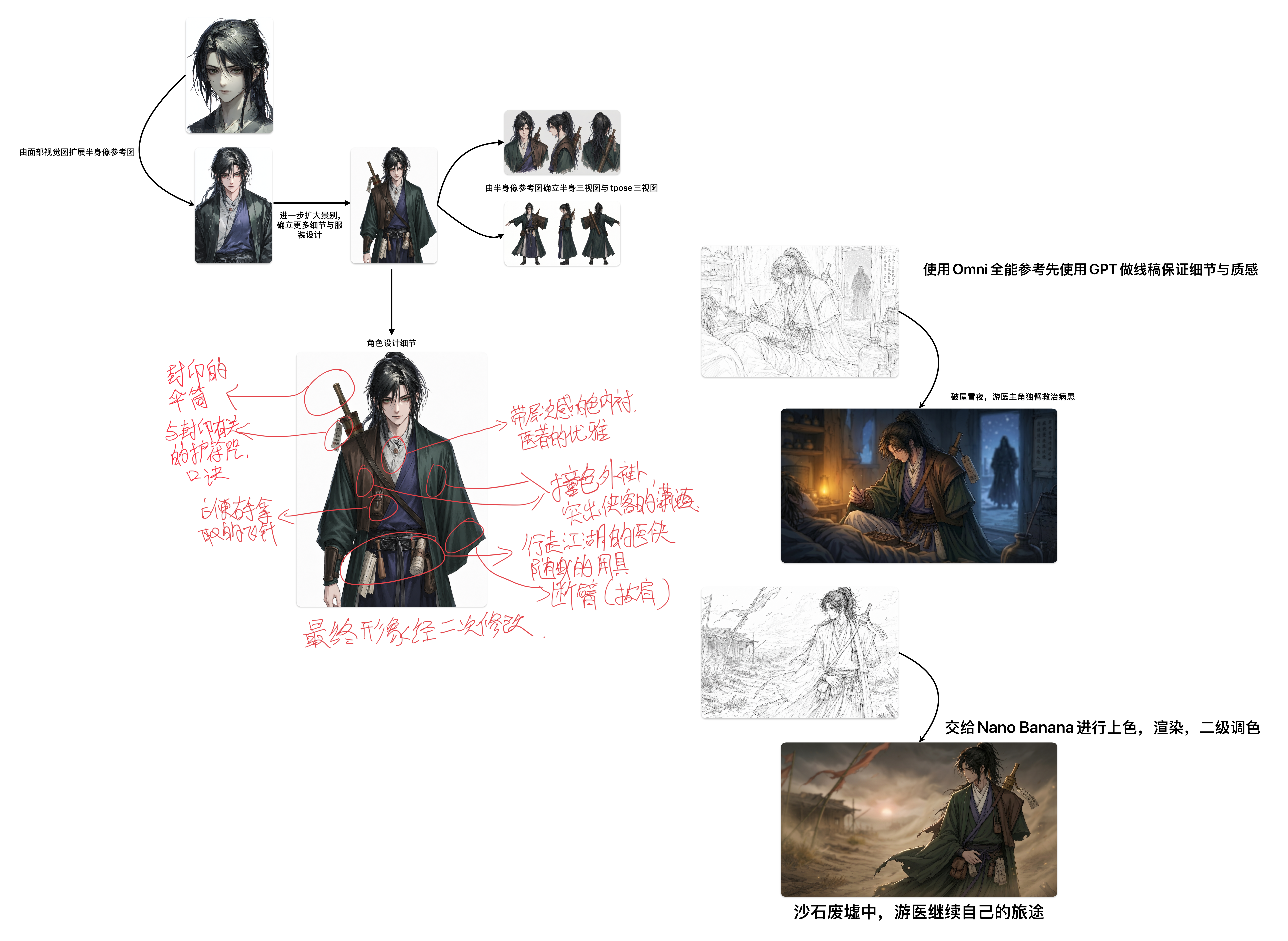
Wandering Healer character concept document. Left: face → half-body → three-view → details (GPT line art + Nano Banana coloring + secondary grading) | Center: final design with annotations | Right: scene concepts (snowy hut → desert ruins journey). A complete AI-assisted character development pipeline.
Pipeline
Not magic. Workflow.
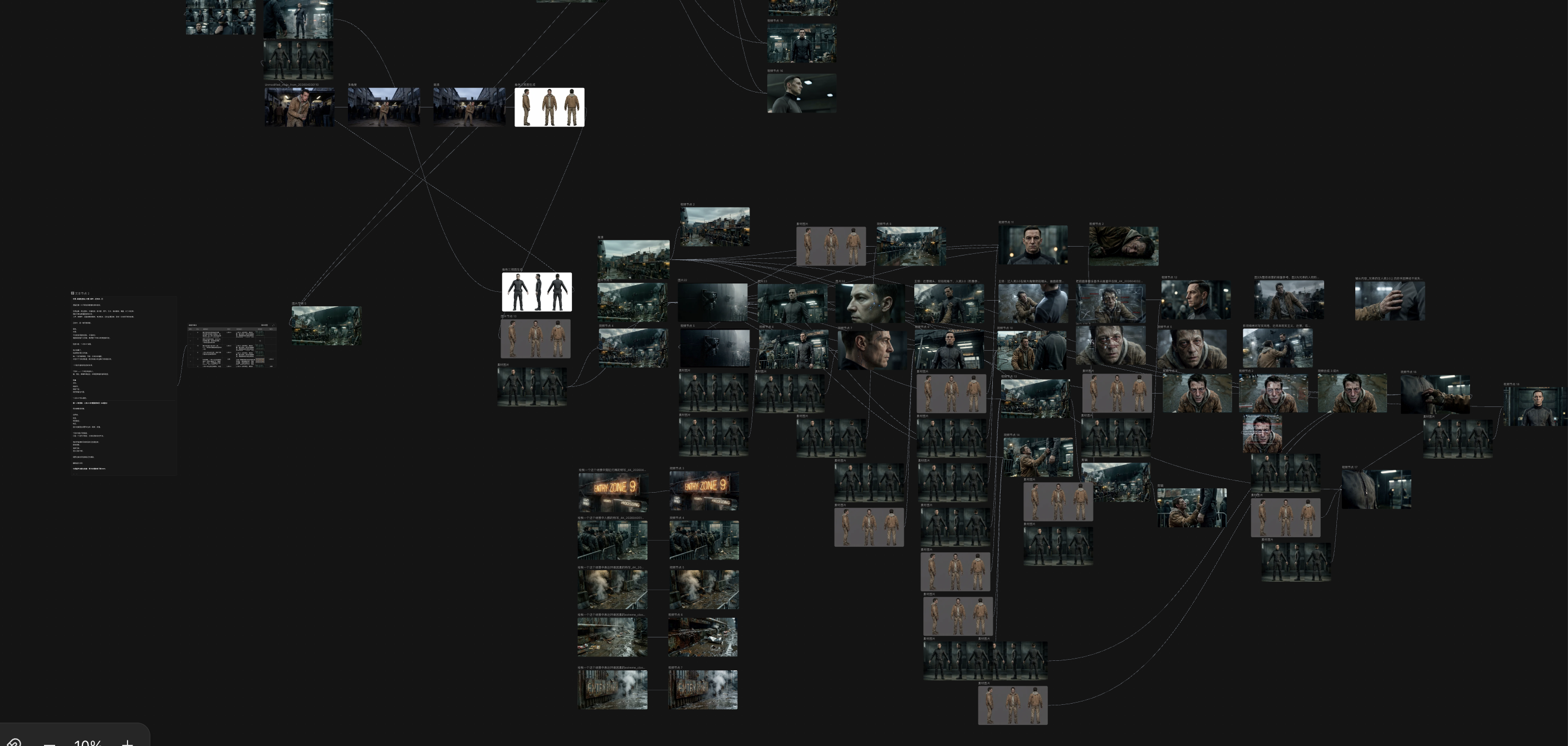
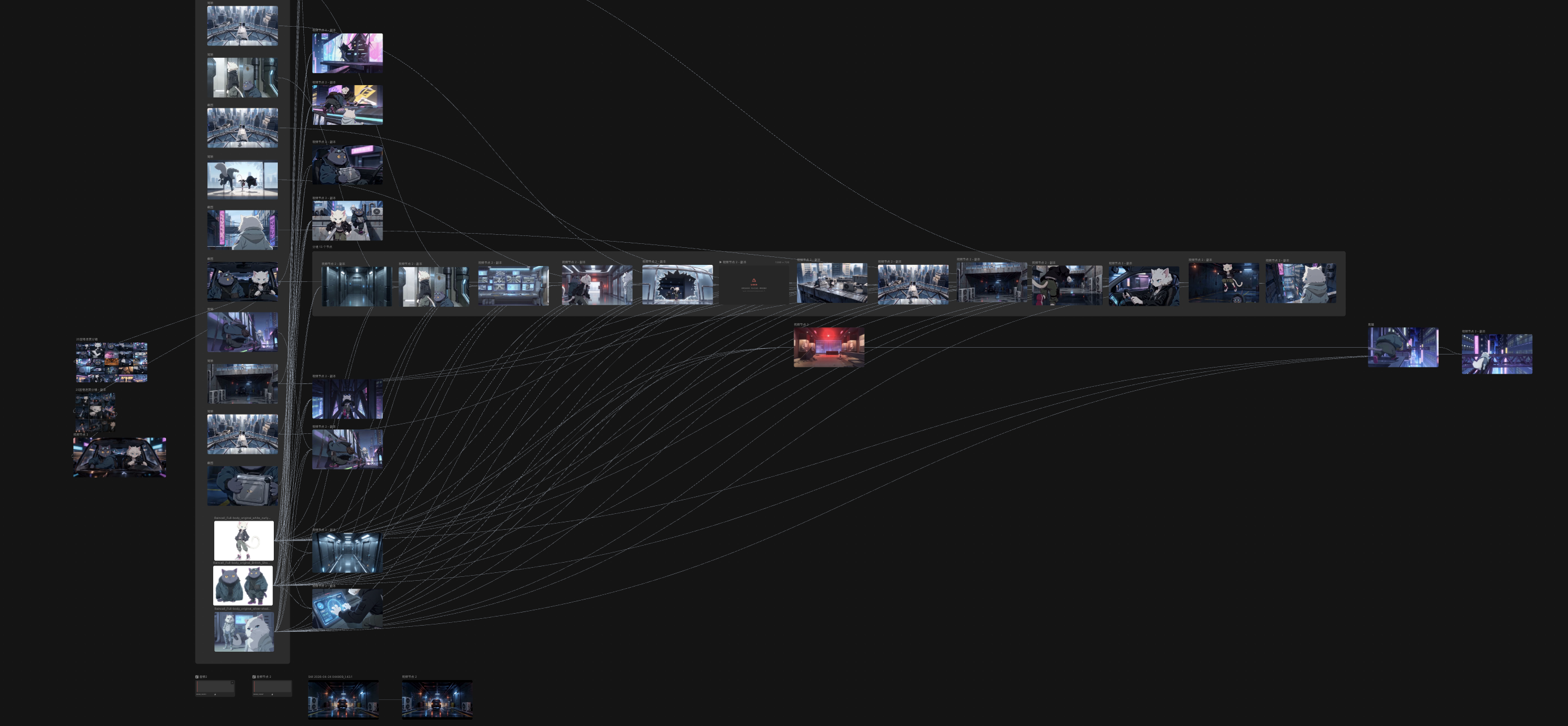
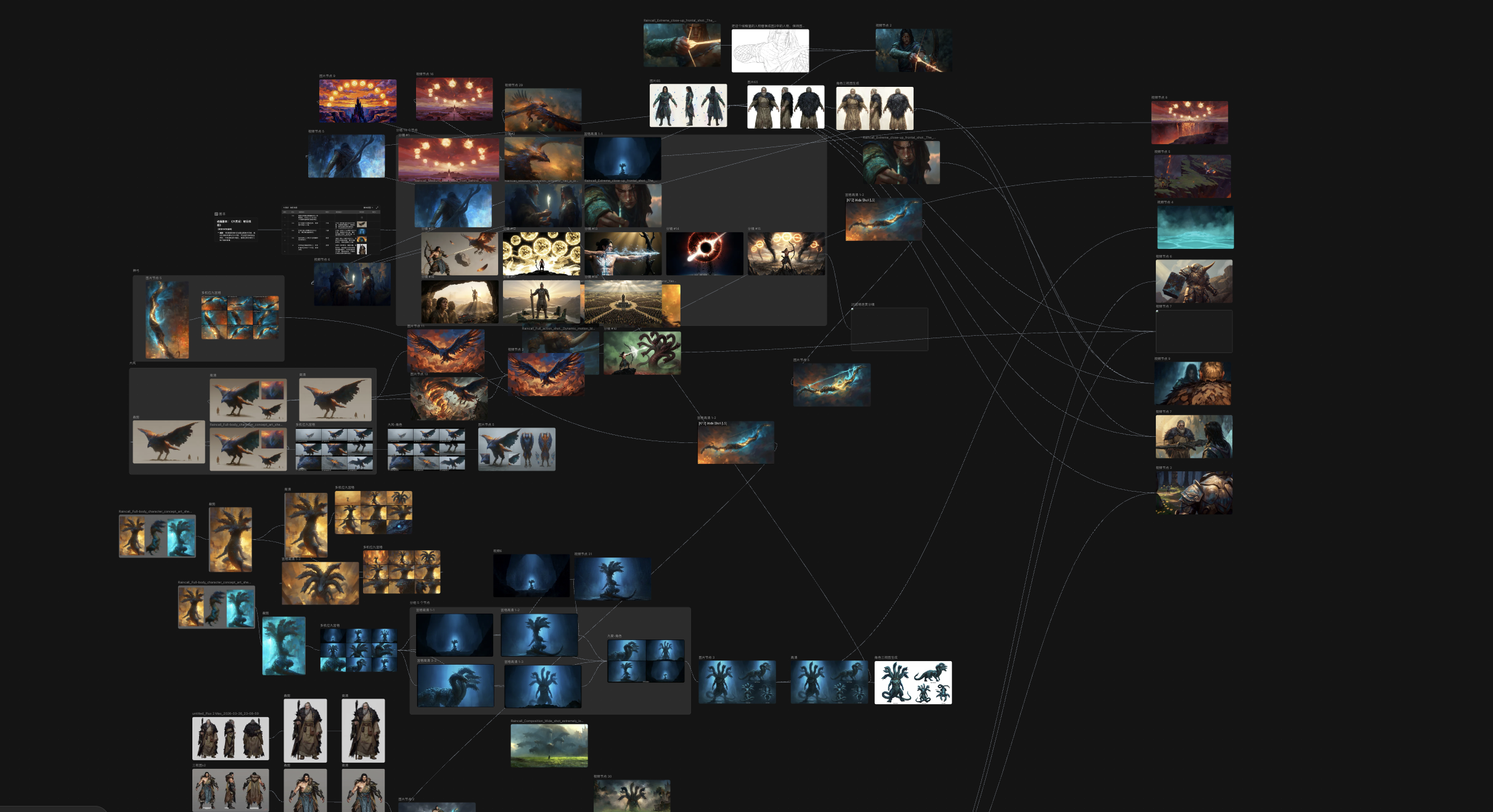
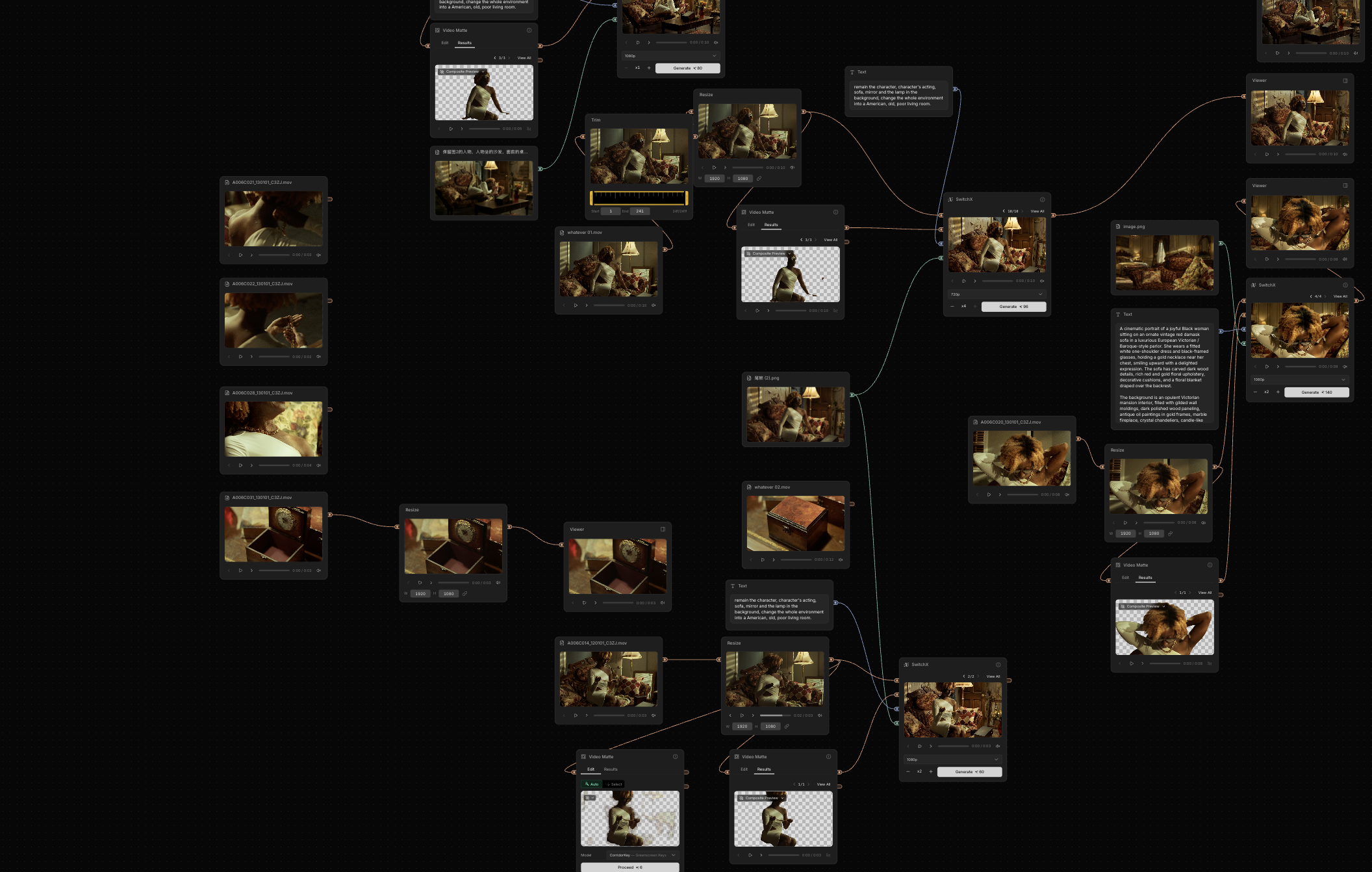
Each node is a creative decision — model selection, parameter tuning, style transfer, ControlNet conditioning, IPAdapter visual guidance. These aren't engineering diagrams. They're creative notes.
Core Belief
AI hasn't replaced filmmaking. It's an extension of my toolbox — like the shift from film to digital, from Steadicam to gimbals. Every time the tools change, the core of storytelling stays the same. The instincts for light, composition, and focus I trained on set — all channeled into prompts. AI is the camera. Taste is the hand that holds it.
Currently Exploring
Hybrid pipelines combining live action and AI. Controllable AI character performance. Real-time generation and on-set interaction. And the feature format — narrative at a scale beyond the short film. AI isn't just changing how we make things. It's redefining how big we dare to tell stories.